






Thread Thickness and Needle Size Explained
Understanding Embroidery Thread Thickness and Needle Size: A Guide for Wilcom Users
Embroidery quality depends on many factors, but two of the most critical are thread thickness and needle size. While threads and needles may look similar, they are measured using different systems worldwide, which often causes confusion. This guide explains the main systems, provides mappings, shows how to match thread with the right needle, and explains how Wilcom software represents thread thickness.
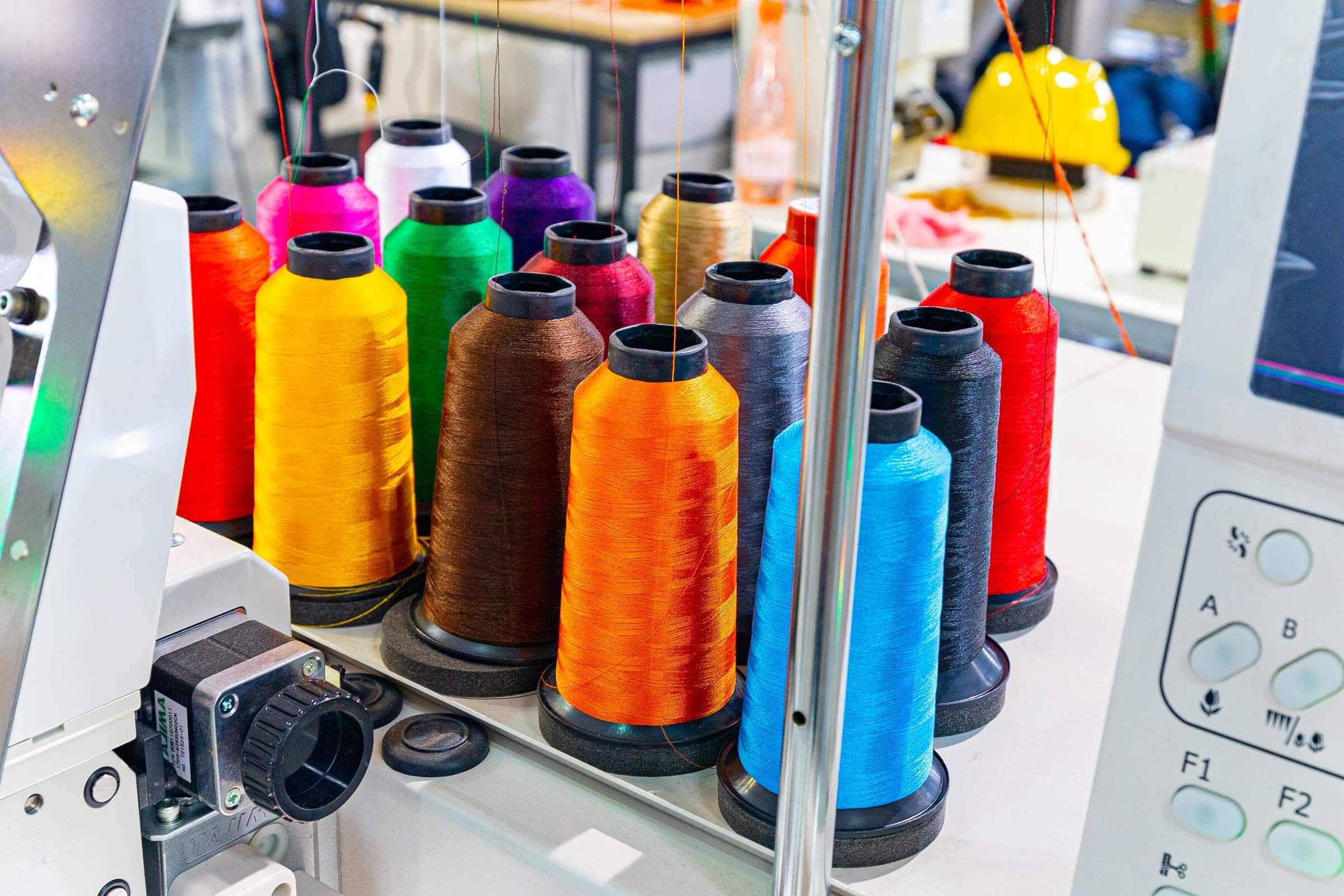
Why Thread and Needle Selection Matters
- Design accuracy: Fine threads and small needles are ideal for tiny text and delicate details, while heavier threads and larger needles emphasize bold areas.
- Machine performance: Using the wrong needle–thread combination can cause thread breaks, skipped stitches, or damage to fabric.
- Visual effect: Thread thickness and needle size directly affect how crisp, bold, or delicate a design looks.
Global Embroidery Thread Measurement Systems
1. Weight (wt)
- Common in the U.S. and Europe.
- Lower numbers = thicker thread.
- Standard embroidery thread is 40 wt.
2. Denier (D)
- Measured in grams per 9,000 meters.
- Higher number = thicker thread.
- Example: 120D/2 means two plies of 120 denier each.
3. Tex (T)
- ISO textile system.
- Grams per 1,000 meters.
- Higher Tex = thicker thread.
4. Ticket Number (Nm)
- Common in Europe.
- Meters per gram (or 10 grams).
- Higher number = finer thread.
Explanation: The Ticket Number (also known as Metric Number or Nm) describes the thread’s thickness based on its length per unit weight. It represents how many meters of thread weigh one gram (or ten grams). Therefore, a higher ticket number means a finer thread, and a lower ticket number means a thicker thread. For example, Nm 100/2 is a very fine thread, while Nm 40/2 is thicker. This system is mainly used in Europe for threads.
Note: Needle sizes also use the Nm metric, but here it refers to the needle’s diameter in hundredths of a millimeter, not a length/weight ratio. So, the ticket number for threads and the Nm size for needles are different measurements.
Global Embroidery Needle Measurement Systems
1. Metric Size (Nm)
- Diameter of the needle shaft in hundredths of a millimeter.
- Example: Nm 75 = 0.75 mm diameter.
2. Singer / U.S. System
- Traditional U.S. numbering system.
- Example: Singer 11 ≈ Nm 75.
Thread and Needle Overview
| Thread Category | Weight (wt) | Denier (D) | Tex (T) | Ticket (Nm) | Rec. Needle (Metric/U.S.) | Typical Use |
|---|---|---|---|---|---|---|
| Very fine | 70 | 60–65/2 | ~14 | 120/2 | 65/9 or 70/10 | Tiny lettering, delicate embroidery |
| Fine | 60 | ~75/2 | ~17 | 100/2 | 70/10 or 75/11 | Finer details, lightweight fabrics |
| Standard | 40 | ~120/2 | ~27 | 70/2 | Nm 75/11 (most common) | General embroidery, broadest use |
| Thick | 30 | ~150/2 | ~35 | 50/2 | Nm 80/12 or 90/14 | Bold outlines, heavier fabrics |
| Extra Thick | 12 | ~360/2 | ~80 | 25/2 | Nm 90/14 or 100/16 | Decorative stitching, denim, canvas |
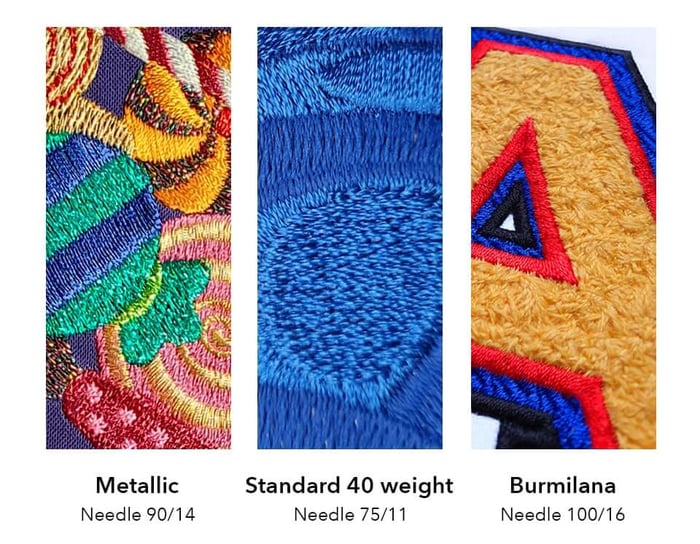
EmbroideryStudio: Thread Thickness System
In Wilcom EmbroideryStudio, thread thickness is represented by simple letter marks (A, B, C, D), which map to approximate thread sizes. This helps digitizers simulate how stitches will appear when using different threads.
| Wilcom Thickness Mark | Description | Approx. Thread SIze |
|---|---|---|
| A | Normal embroidery thread | ~40 wt / ~Denier 120 |
| B | Thicker than normal | ~30 wt / ~Denier 150 |
| C | Finer than normal | ~60 wt / ~Denier 75 |
| D | Very fine | ~70 wt / ~Denier 65 |
| E (Proposed) | Very thick | ~20 wt/ ~Denier 250 |
| F (Proposed) | Extra thick | ~12 wt/ ~Denier 360 |
This system ensures that even if users do not know the exact thread specification, they can still select a relative thickness category in Wilcom software for realistic stitch simulation.
Practical Tips for Wilcom Users
- Match thread and needle: Always pair fine threads with smaller needles, heavy threads with larger needles.
- Digitizing adjustments: Reduce density for heavier threads, increase for finer threads.
- Machine setup: Adjust tension and use correct needle point style (sharp, ballpoint) based on fabric type.
- Use Wilcom’s A–F marks: Select the right thickness category for accurate software simulation.
Key Takeaways
- The embroidery industry uses multiple sizing systems for both threads and needles.
- 40 wt thread with Nm 75/11 needle is the global standard combination.
- Wilcom’s A–D marks (and proposed E-F) provide an easy way to represent thread thickness in design work.
- Finer or heavier threads require corresponding adjustments in needle size, digitizing, and machine setup.
At Wilcom, we believe that knowledge empowers creativity. By understanding thread thickness and needle size systems — and how they map together — you can achieve professional results with Wilcom software and your embroidery machines.
Ask about the world's
favorite embroidery software!

Got questions? We’re here to help.
Contact us